Marking the Khmer New Year: Songkran in Phnom Penh
Songkran in Phnom Penh: Each April, Phnom Penh’s vibrant streets transform into a jubilant playground of water fights, sacred ceremonies, and lively celebrations.
Songkran, known locally as Chaul Chnam Thmey (meaning “Enter New Year”), is Cambodia’s version of the traditional New Year festival observed across much of Southeast Asia.
While it shares similarities with Thailand’s Songkran, Cambodia’s celebration retains a distinct cultural identity rooted deeply in tradition, religion, and community spirit.
In this article, we’ll dive into the rich history, cultural significance, traditional practices, and the modern-day festivities of Songkran in Phnom Penh, painting a vivid picture of why this festival holds a cherished place in Cambodian hearts — and why it’s an experience you shouldn’t miss.
A Festival of Renewal: The Origins of Songkran
Songkran’s roots stretch back to ancient Hindu and Buddhist traditions. It marks the end of the dry season and welcomes the rainy season, a critical event in an agrarian society like Cambodia, where water symbolizes life, purification, and renewal.
Historically, Songkran coincides with the sun’s transition into Aries, a zodiacal change regarded as a cosmic new year. Over centuries, Cambodia infused this astrological celebration with Theravāda Buddhist traditions, resulting in the three-day event we know today.
The essence of Songkran remains unchanged: it’s a time to cleanse away misfortunes, pay respects to elders and ancestors, and usher in a year of blessings, health, and happiness.


The Three Sacred Days of Cambodian New Year
While the water fights tend to steal the spotlight today, traditional Songkran in Phnom Penh unfolds through three important ritual days, each imbued with spiritual meaning:
Day 1: Maha Sangkran
The festival kicks off with Maha Sangkran, a day of preparation and honor. Cambodians clean their homes, wash sacred Buddha images, and build small sand stupas at temples, symbolizing Mount Meru, the center of the universe in Buddhist cosmology.
At Phnom Penh’s famous pagodas — like Wat Phnom and Wat Botum — residents and visitors alike gather to offer food to monks, light incense, and pray for prosperity. The city resonates with the deep echo of chanting monks, blending reverence with celebration.
Day 2: Virak Vanabat
On the second day, Virak Vanabat, Cambodians dedicate themselves to charitable acts. Many visit temples to make offerings to monks, donate to the poor, or release captive animals as a form of merit-making.
Families often take this day to honor their ancestors by offering food and gifts in memorial ceremonies known as Bang Skaul. It’s a quieter, introspective day compared to the raucous festivities outside.
Day 3: Vearak Loeng Sak
The third and final day, Vearak Loeng Sak, focuses on ritual cleansing. Traditionally, people pour fragrant water over Buddha statues, monks, and elders as a sign of respect and to wash away the sins of the past year. Today, this ritual has exploded into city-wide water fights!
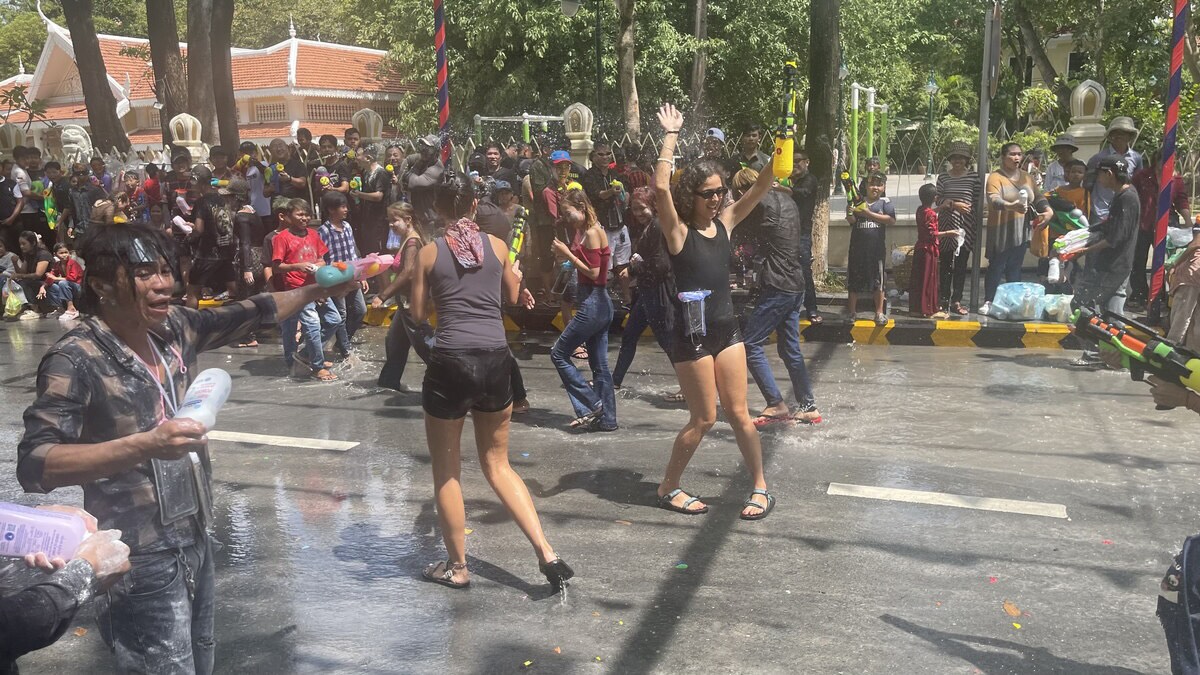
In Phnom Penh, you’ll find children, teenagers, and even whole families armed with water guns, buckets, and hoses, dousing each other in gleeful abandon across every corner of the city.


Songkran in Phnom Penh: Where Tradition Meets Celebration
While Songkran is celebrated across Cambodia, Phnom Penh brings a unique, energetic flavor to the festival. The capital blends time-honored rituals with a youthful, urban spirit, making it one of the most exhilarating places to experience Songkran.
Here’s how the city lights up during the three-day celebration:
Wat Phnom: The Spiritual Heart
During Songkran, Wat Phnom becomes the spiritual center of the city. Locals and tourists alike flock here to offer prayers, light candles, and build intricate sand stupas. The ancient temple grounds fill with the scent of incense, the sound of traditional music, and the soft murmur of prayers.
Traditional games like Bos Angkunh (a game involving throwing palm tree seeds) and Leak Kanseng (similar to duck-duck-goose) are played by children and adults alike, connecting generations through joyful activities.


Riverside Road (Sisowath Quay): The Water Battle Arena
As the sun climbs high, Phnom Penh’s usually busy riverside turns into a wild battlefield. Sisowath Quay, with its bars, restaurants, and open plazas, becomes ground zero for one of Southeast Asia’s biggest water fights.
Armed with colorful water guns, everyone from toddlers to grandparents soaks anyone in sight. Pickup trucks filled with laughing youths drive slowly down the street, dousing revelers with buckets of water. Tourists are more than welcome to join in — but be warned, you will get wet!
You will also find yourself routinely smeared with talcum powder on your face by well-meaning strangers.
The reason for the talcum powder is that, over time, the tradition shifted to people dusting each other’s faces with powder as a gesture of friendship and a wish for good fortune in the New Year. White symbolizes purity.
Adding to the fun are stages set up with live DJs, traditional dance performances, and food stalls selling everything from sweet sticky rice cakes to spicy skewered meats.
Cambodia Bucket List must note that this year, the Wat Phnom circular road was also a focus of frenetic water fights.

The Royal Palace and Pagodas: Honoring Tradition
Despite the wild scenes elsewhere, tradition remains paramount. Families visit the Royal Palace and temples like Wat Ounalom to offer their prayers. Here, you’ll find beautiful flower displays, candlelight vigils, and elderly Cambodians in their finest traditional clothing receiving blessings.
This duality — wild water wars in some parts, solemn ceremonies in others — perfectly encapsulates the spirit of Songkran in Phnom Penh.
Modern Twists: How Phnom Penh’s Youth Celebrate Songkran
While tradition remains strong, Phnom Penh’s younger generation has added their own flair to Songkran celebrations. Here’s how modern influences have reshaped the festival:
- Music Festivals: Venues across the city host huge music events featuring popular Cambodian pop stars, international DJs, and cultural performances. Think water fights mixed with electronic dance music under colorful LED lights.
- Costume Parties: Many young Cambodians dress in humorous costumes — from superheroes to cartoon characters — as part of the water battle festivities.
- Social Media Frenzy: Songkran has become one of the biggest events on social media in Cambodia. TikTok challenges, Instagram stories of wild water fights, and livestreamed ceremonies are now integral parts of the experience.
- Eco-Friendly Initiatives: Recent years have seen efforts to promote environmentally conscious celebrations, including biodegradable water balloons and less plastic use during the festival.
Traditional Foods to Try During Songkran
No Cambodian festival is complete without a feast, and Songkran is no exception. Whether offered at temples or sold by street vendors, traditional New Year foods are a delicious part of the celebration:
- Nom Banh Chok: Cambodia’s beloved rice noodle dish topped with green fish curry — fresh, light, and perfect for the heat.
- Bay Ben: Sticky rice desserts often made with coconut milk and banana, served wrapped in banana leaves.
- Beer and Coconut Water: Keep cool with refreshing drinks found everywhere from riverside bars to pop-up stalls.
- Grilled Meats and Fresh Fruits: From skewered beef sticks to platters of watermelon and mango, Phnom Penh’s Songkran street food scene is vibrant and tasty.
Cambodia Bucket List acquired a beautifully crafted box of Bay Ben for just US$4. Our only regret? Not purchasing more — they were absolutely delicious.


Tips for Experiencing Songkran in Phnom Penh
Planning to dive into Phnom Penh’s Songkran celebrations? Here are a few handy tips:
- Protect Your Electronics: Waterproof pouches are a must! Expect to get drenched within minutes of stepping outside.
- Dress Appropriately: Wear light, quick-dry clothing. Cambodians tend to dress modestly even during water fights, so avoid overly revealing outfits.
- Respect Traditions: While water fights are fun, remember that temples and elders should always be treated with respect.
- Stay Hydrated and Sun-Safe: April is the hottest month in Cambodia. Bring sunscreen, drink plenty of water, and seek shade when needed.
- Go With the Flow: Most importantly, embrace the chaos! Songkran is about joy, renewal, and community — the wetter, the better.
The Deeper Meaning of Songkran
Beyond the revelry, Songkran is a poignant reminder of the Cambodian spirit: resilient, joyful, and deeply connected to family and faith. It’s a moment where the past, present, and future converge — where ancient traditions meet youthful energy, and where cleansing water symbolizes not just fun, but a fresh start for all.
Phnom Penh, a city often associated with its history and rapid modern development, truly shines during Songkran. Amidst the splashes of water and peals of laughter, there’s a profound sense of unity, hope, and celebration of life.


Conclusion: Why You Should Experience Songkran in Phnom Penh
If you find yourself in Cambodia in April, there’s no better place to experience Songkran than Phnom Penh. The capital city offers an unforgettable mix of sacred tradition and joyful mayhem. Whether you’re paying respects at a tranquil temple, dancing at a riverside music festival, or being ambushed by water-wielding teenagers, Songkran in Phnom Penh promises memories that will stay with you forever.
More than just a festival, it’s a beautiful expression of Cambodia’s culture, community spirit, and zest for life.
So grab a water gun, don your brightest smile, and get ready to be part of one of Southeast Asia’s most enchanting celebrations!
Further Reading about the significance of the Songkran festival in Cambodia.
Ready for your next adventure?
Discover hidden gems, unforgettable experiences, and must-do activities in Phnom Penh and beyond.
👉 Explore more adventures in Phnom Penh
🇰🇭 Or uncover other epic destinations across the Kingdom of Wonder at Cambodia Bucket List
By following us, you’ll be the first to discover hidden gems, travel tips, and unforgettable experiences across Cambodia as we roll them out! 🇰🇭