Discover the Mystical Kampong Trach Cave Kampot: Cambodia’s Hidden Limestone Wonder
Kampong Trach Cave Kampot is one of Cambodia’s hidden gems.
While the country is famous for iconic sites like Angkor Wat and the beaches of Koh Rong, this cave system in Kampot province offers an off-the-beaten-path experience unlike any other.
With dramatic limestone formations, sacred shrines, natural pools, and a fascinating blend of history and myth, Kampong Trach Cave Kampot provides a unique mix of adventure, spirituality, and raw natural beauty.
Whether you’re a backpacker looking for your next adventure or a cultural traveler eager to explore Cambodia beyond the usual tourist trails, Kampong Trach Cave deserves a spot on your itinerary.
This in-depth guide covers everything you need to know—what to expect, how to get there, the legends surrounding the cave, and why it should not be missed.


The Road Less Traveled: Getting to Kampong Trach Cave Kampot
Located about 40 kilometers east of Kampot town, the journey to Kampong Trach Cave is a scenic ride through rural Cambodia.
Lush rice fields, traditional wooden stilt houses, and towering karst formations shape the countryside.
The road isn’t always smooth, especially after the turnoff from the main highway, but that’s part of the adventure.
You can reach the cave by:
- Motorbike: Renting a motorbike in Kampot gives you freedom to explore at your own pace. The ride takes about an hour each way.
- Tuk-tuk: A more relaxed, if slower, option. Many drivers offer half-day tours.
- Private car or tour: Ideal for those who prefer comfort or are traveling in a group.
Along the way, you’ll likely pass farms, children waving hello, and perhaps a herd of cows slowly crossing the road.
It’s rural Cambodia at its most charming.
The Kampong Trach Cave Kampot Complex: What to Expect
Upon arrival, you’ll pass a peaceful countryside pagoda and a modest path leading into the cave.
There’s no official entrance fee, making this experience even more inviting for independent travelers.
While no ticket booth exists, donations to the local temple are appreciated.


The Main Cave: Where Nature and Worship Meet
The primary cave chamber—open to the sky due to a collapsed ceiling—is a dramatic natural amphitheater filled with sacred energy and living spirituality.
Here, ancient stone and living vegetation merge with centuries of local devotion.
Inside this central space, visitors will find a remarkable mix of Buddhist and Hindu statues, reflecting Cambodia’s rich spiritual heritage:
Buddhist Elements
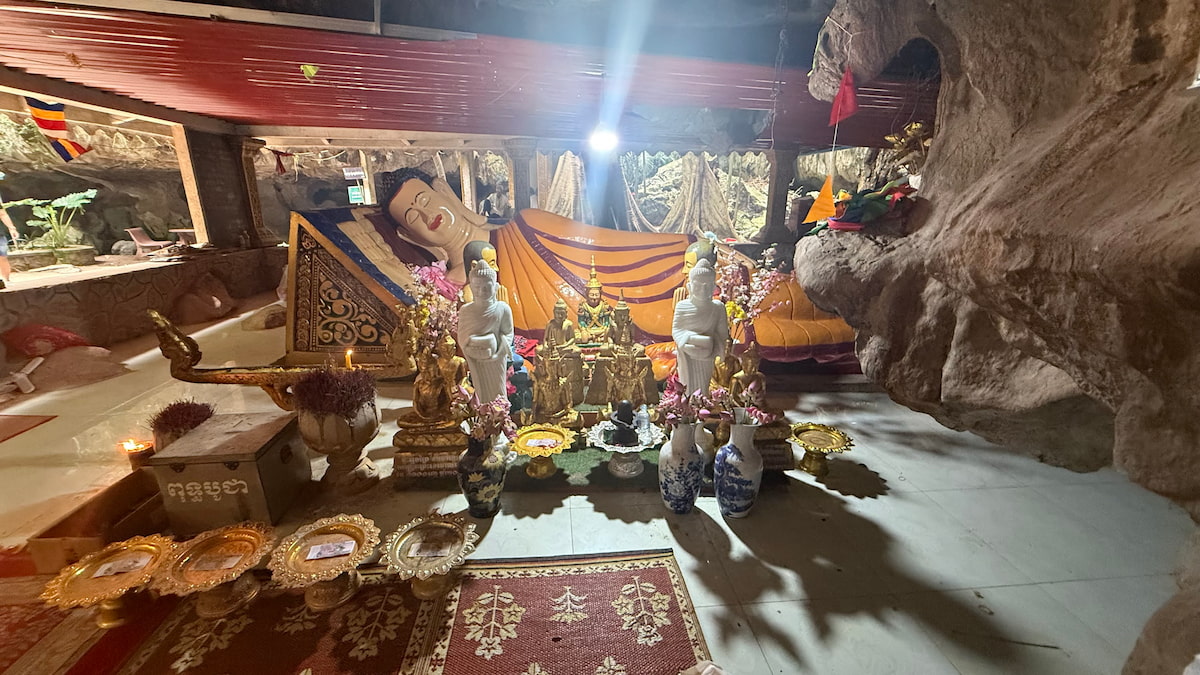
- A reclining Buddha statue, usually draped in a saffron or gold cloth, lies peacefully on a raised platform, symbolizing the Buddha’s passing into Nirvana.
- Seated and standing Buddha statues are scattered throughout smaller alcoves, each in a specific posture (mudra) representing teaching, protection, or meditation.
- Mini stupas and incense altars are often found beneath stalactites or beside natural rock walls, with small offerings of fruit, lotus flowers, and candles.
Hindu Influences
- Shiva lingam (a symbolic stone representing the Hindu god Shiva) may be found tucked in darker chambers.
- Carvings of Vishnu or Brahma may be present in deeper corners, either as worn stone reliefs or statues brought in by local devotees.
- Naga sculptures, common to both Hinduism and Buddhism in Cambodia, appear in serpent-like stone forms or are carved into rock as guardians of the sacred space.
In the main cave’s central space, visitors follow a passageway into an extended low-hanging cave system showcasing more Buddhist and Hindu statues.
Railings line the path to keep visitors safe and prevent accidents.
Locals spend extended periods worshiping within this wet, cold cave complex.
These elements show how Buddhism and Hinduism have historically blended in Cambodian culture, especially in rural sacred sites like this one.
It’s not uncommon to see villagers honoring both traditions in their offerings.


Sun and Moon Caves: Natural Temples
These smaller caverns are named for the celestial-like holes in their ceilings.
Sunlight and moonlight filter in dramatically, illuminating small altars that contain:
- Buddha statues, often seated in meditation or blessing posture
- Offerings of water, candles, and lotus flowers
- In some cases, Hindu iconography, like multi-armed figures or tridents, left by visitors who follow or respect both traditions
These spaces are deeply quiet, cool, and meditative—ideal for personal reflection or prayer.
You can swim in the clear and cool waters of the Sun Cave, which holds a sacred, seasonal lake that fills during the rainy season.
In contrast, the Moon Cave sits higher up and offers stunning views of the surrounding limestone landscape — but it is not a swimming area.
While some visitors refer loosely to “the swimming cave,” there is no officially named cave by that title.
It’s popular with locals who come to cool off, and brave travelers often take a dip.
Tip: Bring a towel and wear clothes suitable for swimming if you’re feeling adventurous.
Sacred Corners and Hidden Shrines
As you explore deeper into the complex, you’ll find smaller natural chambers that serve as private sanctuaries.
Time and weather have worn the stone-carved images, and locals wrap red cloth around rocks to signify spiritual energy or the presence of a neak ta (local guardian spirit).
Devotees place small Hindu-style altars—some dedicated to Ganesh, the elephant-headed remover of obstacles—deep within the recesses.
Monks and villagers actively maintain these spaces, frequently leaving fresh offerings and chanting softly in the deeper grottoes.
Respectful Visiting Tips
- Remove your shoes before stepping near any statue or shrine
- Dress modestly (shoulders and knees covered)
- Don’t touch religious objects or statues
- Ask before taking photos, especially if monks or locals are praying nearby
- Make a small donation if you photograph shrines or receive guidance
History Woven in Stone
While the natural beauty of Kampong Trach Cave is stunning, its history adds deeper meaning.
Spiritual Significance
The cave has long been a site of Buddhist worship.
Shrines, spirit houses, and prayer flags can be found throughout the area.
Locals visit to pay respects, meditate, or pray for good fortune.
The combination of natural grandeur and sacred tradition gives the space a peaceful, almost reverent air.
Darker Days: Khmer Rouge Era
Like many remote areas of Cambodia, Kampong Trach was affected by the Khmer Rouge regime.
The caves were reportedly used as hideouts, prisons, or execution sites during the 1970s.
While no official memorial exists here, some older locals may speak in hushed tones about the past.
A visit to Kampong Trach Cave is not only a step into nature but also a quiet reflection on Cambodia’s complex history.


Wildlife and Natural Surroundings
The area surrounding the cave is rich in biodiversity.
While hiking to some of the more remote caves or swimming holes, you might spot:
- Butterflies fluttering in the sunlight near the cave entrance
- Birds nesting in crevices or darting in and out of caverns
- Bats roosting in dark chambers, especially deeper inside
Be cautious when exploring tighter caves—wear sturdy shoes and bring a flashlight or headlamp, as it can get very dark and slippery.
Local Life and Culture
Kampong Trach is more than just a cave—it’s a living community.
The village around the cave system is home to friendly locals who rely on agriculture, small-scale tourism, and fishing.
Supporting the Community
When you visit, consider:
- Buying snacks or drinks from local vendors
- Hiring a local guide
- Donating to the local pagoda or school if you’re feeling generous
Your visit contributes to sustainable tourism and helps preserve the site for future generations.
Tips for Your Kampong Trach Cave Kampot Visit
Here’s everything you need to know to make the most of your trip:
What to Bring
- Comfortable walking shoes
- Water and snacks
- Camera or phone with flashlight
- Sunscreen and insect repellent
- Modest clothing (shoulders and knees covered)
Best Time to Visit Kampong Trach Cave Kampot
- Dry season (Nov–April): Easier access and good conditions for walking
- Wet season (May–Oct): Lusher landscape and full swimming pools, but slippery paths
Duration
Allow at least half a day for the round trip from Kampot and a relaxed exploration of the caves.
Ideal Itinerary: Half-Day Adventure from Kampot
- 8:00 AM – Depart from Kampot by motorbike or tuk-tuk
- 9:00 AM – Arrive at Kampong Trach village and cave entrance
- 9:15 AM – Explore the main cave, shrines, and Buddha statues
- 10:00 AM – Walk to the Swimming Cave and take a dip
- 10:45 AM – Visit the Sun and Moon caves or other hidden chambers
- 11:30 AM – Return to the village for a local snack or drink
- 12:00 PM – Head back to Kampot
For those with more time, consider combining the visit with nearby attractions like pepper farms, salt flats, or even Kep beach.
Kampong Trach Cave Kampot Photography Tips
Kampong Trach Cave is incredibly photogenic, especially in the right light. Here’s how to capture its magic:
- Morning light: Best for catching rays filtering into the main cave
- Contrast: Use the bright sun and dark cave interior for dramatic shots
- Reflections: The swimming pool creates gorgeous mirror effects
- Macro: Focus on textures—limestone walls, moss, carvings
During our visit, our camera unfortunately suffered water damage while photographing inside the caves.
Because of this, we don’t have any photos of the Sun and Moon Caves, or the surrounding area.
Despite this setback, the beauty and atmosphere of Kampong Trach Cave Kampot remain unforgettable and well worth the visit.
Final Thoughts: Why Kampong Trach Cave Kampot Should Be on Your Bucket List
Kampong Trach Cave isn’t Cambodia’s most famous attraction—but that’s exactly why it’s so special.
It’s raw, real, and relatively untouched by mass tourism.
You won’t find crowds or ticket lines—just stunning nature, ancient shrines, and friendly locals eager to share their stories.
If you’re staying in Kampot or Kep and looking for something unique, spiritual, and adventurous, this cave system offers a memorable, meaningful experience.
In a country filled with wonders, Kampong Trach Cave stands out for its atmosphere of mystery and reverence, where every echo and shaft of light feels like part of a deeper story.
Bonus: Personal Reflection of Kampong Trach Cave Kampot
On our first visit to Kampong Trach Cave, we remember standing inside the main atrium, staring up at the collapsed roof.
Vines dangled from the cliffs, sunlight bathed the stone floor, and incense from a nearby shrine drifted through the air.
It felt like we’d stepped into a secret place—one that had stood silently for thousands of years, watching history unfold.
If that kind of connection is what you seek on your travels, Kampong Trach won’t disappoint.
There isn’t an official government-run website dedicated solely to Kampong Trach Cave. However, the Ministry of Tourism of Cambodia provides information about the area on their official website.
Ready for your next adventure?
Discover hidden gems, unforgettable experiences, and must-do activities in Phnom Penh and beyond.
👉 Explore more adventures in Kampot
🇰🇭 Or uncover other epic destinations across the Kingdom of Wonder at Cambodia Bucket List